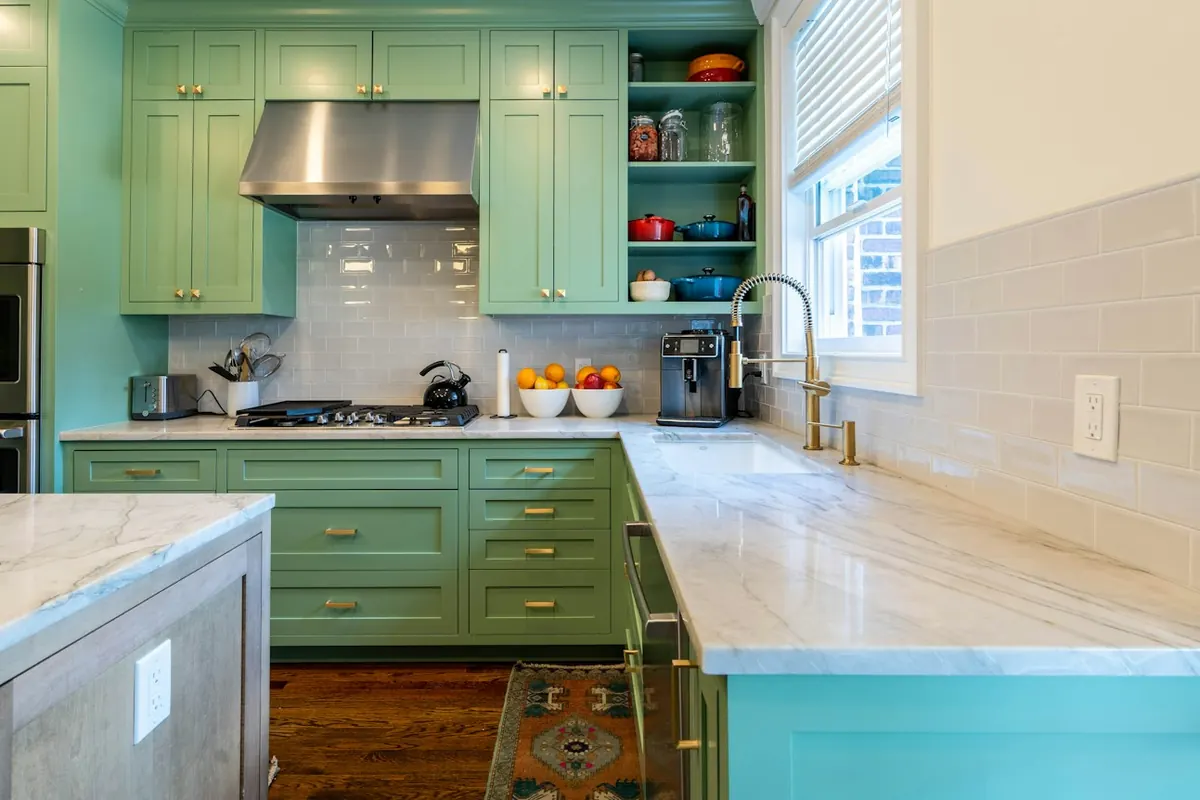
Custom Cabinets in Lancaster, CA
Cabinets built to your measurements for houses in Lancaster, CA and across the Antelope Valley, from Palmdale and Quartz Hill to Rosamond and Leona Valley. Kitchens, vanities, built-ins, closets, garages, refacing and installation. Free written quotes, measured on site, with the scope and the number in writing before you agree to anything.
- Custom kitchen cabinets and islands
- Bathroom vanities and linen towers
- Built-ins, closets and pantries
- Refacing, doors and installation
Cabinet sizes, box material, door style, finish and hardware, all listed before you sign anything.
So you can check it yourself on the CSLB register in about a minute. C-6 is the cabinet classification.
Field dimensions taken on site, never scaled off a builder floor plan or a photograph.
Quotes and job walks handled in either language. Se habla espanol.
The Houses We Build Cabinets For in Lancaster, CA
Lancaster is a young city with an unusually uniform housing stock, and that changes what a cabinet job looks like here. The city only incorporated on 22 November 1977, and most of what stands in it went up in the growth waves that followed. Its twin, Palmdale, incorporated back in 1962 and then expanded hard through the 1980s and 1990s as affordable housing pulled commuters north out of the Los Angeles basin. What that leaves, across 94 square miles and 173,516 residents, is street after street of tract kitchens built to the same handful of floor plans within a few years of each other.
Three patterns come up again and again. First, the original builder kitchen: stock boxes in three inch increments, particleboard carcases, a filler strip where the cabinet run did not quite reach the wall, and no pantry because the plan never had one. Second, the 1990s and 2000s replacement: better doors bolted onto the same layout, so the corner still swallows pans and there is still no drawer wide enough for a sheet tray. Third, and much less common but much more interesting, the rural custom house on acreage out toward Leona Valley or Acton, where the kitchen was never a catalogue in the first place.
Custom cabinetry earns its money against the first two. When every wall is a known length and every appliance is a known size, a shop can build to the inch instead of to the nearest three inches, which is usually the difference between a filler strip and an extra drawer bank. See what that means in a kitchen on the kitchen cabinets page, or start from the full custom cabinets guide for Lancaster, CA.
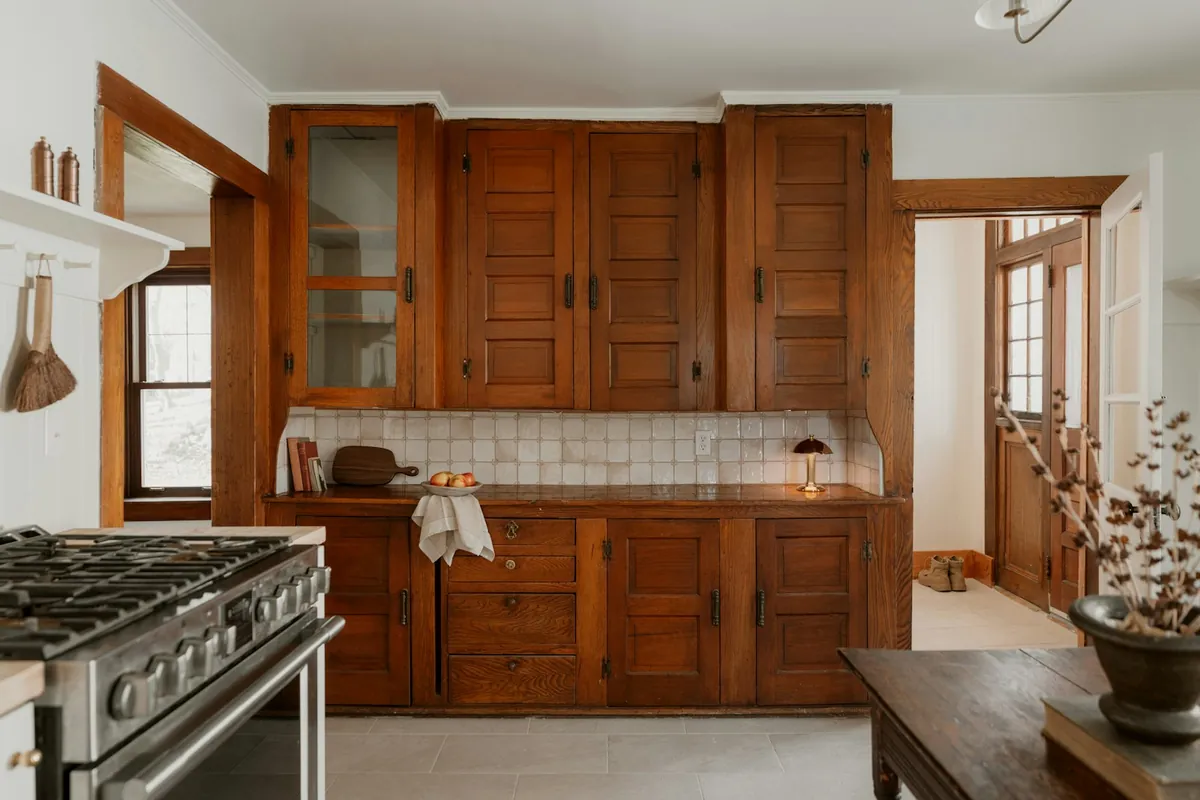
Get a Measured Quote for Your Antelope Valley Kitchen
Tell us the town and what you want built. Somebody measures the room, and you get a scope and a number in writing with nothing to sign on the spot. Under California law a home improvement contract over $500 has to be written and signed before any work starts anyway, so a written quote is not a favour, it is the first half of the process.
- Cabinet by cabinet dimensions, taken off your walls with a laser on the day
- Box material called out per location, with plywood specified at any sink base
- The contractor licence number on the paperwork, ready for you to check on the CSLB register
- A scribe allowance, because Antelope Valley tract walls are never straight
Cabinet Services in Lancaster, CA and the Antelope Valley
Twelve things a cabinet shop actually gets asked for, each with its own page rather than a line in a list. Kitchens and vanities are the volume. Garages, closets and laundry rooms are where a custom shop quietly beats a big box store, because those rooms almost never match a catalogue width.
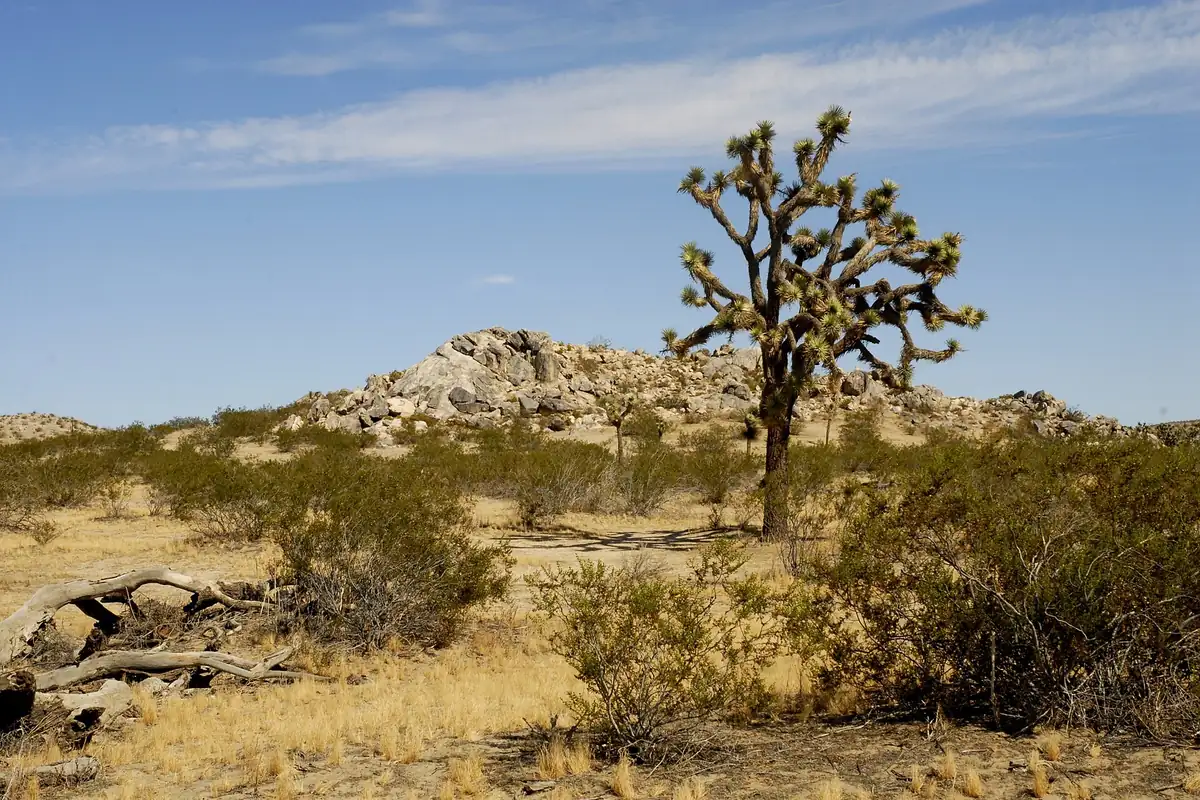
Built for 6 Percent, Not 8: Why the High Desert Changes the Cabinets
Cabinets crack in the Antelope Valley because the wood in them was dried for somewhere wetter. The USDA Forest Service Wood Handbook publishes recommended moisture content for interior woodwork, flooring, furniture and trim in three zones: an average of 8 percent for most of the United States, 11 percent in damp warm coastal areas, and 6 percent in the dry southwestern area, with individual pieces there running 4 to 9 percent. Its Table 13-1 shows the contrast in outdoor equilibrium moisture content plainly, with Los Angeles sitting between 12.1 and 15.1 percent across the year while interior Fresno swings from 7.8 to 16.6.
Lancaster is dry even by California standards: 6.81 inches of precipitation in an average year at the NOAA station at General William J. Fox Airfield, at 2,359 feet, with a mean daily high of 77.1F against a mean daily low of 47.1F. The Handbook states the rule in one sentence: no significant dimensional change will occur if wood is fabricated or installed at a moisture content matching the average atmospheric conditions it will be exposed to. Run that backwards and you have the explanation for every split door panel in the valley.
This is not a marketing angle, it is a specification question you can put to any shop. The materials guide walks through what it changes about box construction, door design, finish and hardware, and the wood species guide compares the common species on how much each one actually moves.
What Cabinets Cost in Lancaster, CA and Los Angeles County
Custom cabinets in the Los Angeles market run $500 to $1,500 per linear foot, against a national range of $400 to $1,200, according to the Los Angeles cabinet pricing guide published by Bradco Kitchens and updated in July 2026. Lancaster sits inside Los Angeles County, so that is the nearest published benchmark for this market. Antelope Valley labour generally runs below basin rates, which tends to put quotes here in the lower half of the band rather than the top of it.
| Tier | Per linear foot | What you are actually buying |
|---|---|---|
| Budget cabinets | $75 to $150 | Stock boxes in fixed widths, filler strips where the sizes do not land. |
| Semi custom | $150 to $650 | A catalogue you can modify: sizes, finishes and some interior fittings. |
| Premium | $300 to $800 | Better boxes, better hardware, more of the layout decided by you. |
| Luxury and full custom | $500 to $1,500+ | Built to your measurements with no catalogue involved at all. |
Source: Bradco Kitchens, How Much Do Custom Cabinets Cost in Los Angeles (2026), updated 10 July 2026. These are Los Angeles market figures, not Lancaster quotes.
| Kitchen size | Cabinets at LA rates | What that layout usually is |
|---|---|---|
| 15 linear feet | $7,500 to $22,500 | A galley or a small L, one run plus a short return. |
| 25 linear feet | $12,500 to $37,500 | The common Antelope Valley tract kitchen with an island. |
| 35 linear feet | $17,500 to $52,500 | A larger L or U with a full island and a pantry wall. |
| 50+ linear feet | Over $75,000 | Open plan with a butler's pantry or a second prep run. |
Measure the run of base cabinets along the wall in feet to get your linear footage. Labour typically accounts for 20 to 30 percent of the total.
For context on smaller jobs, Nationally, Thumbtack records a typical custom cabinet project between $1,447 to $5,294 with an average of $2,817, a low of $552 and a high of $13,423, because that figure counts a single vanity alongside a whole kitchen. By material, a standard kitchen runs $5,000 to $25,000 in solid wood, $1,900 to $13,000 in wood veneer and $4,000 to $15,000 in laminate. The full Lancaster cost guide breaks out installation, add-on line items and what moves a quote up or down.
Ten Signs the Cabinets in Your Lancaster House Are Finished
Most of these are the dry air doing its work over fifteen or twenty years, and most of them cannot be adjusted out with a screwdriver. If you recognise three or more, the question has already moved from repair to refacing or replacement.
- Doors no longer sit flush and the reveals between them have gone uneven, which usually means the frames have moved rather than the hinges having slipped.
- A five piece door has opened at a corner joint and you can see a hairline gap in the finish where the rail meets the stile.
- The centre panel of a raised panel door has shrunk enough that an unfinished stripe of bare wood shows at its edge.
- Drawer bottoms sag or rattle in their grooves, a classic sign of a quarter inch panel that has lost width in dry air.
- The particleboard under the sink has swelled and gone soft, the one place in a dry house that gets repeatedly wet.
- Shelves have bowed under everyday weight, which is a span and thickness problem, not a loading problem.
- Hinges have pulled out of the box side, because the screws were holding in particleboard rather than plywood.
- Toe kicks and end panels have delaminated or the edge banding has lifted at a corner.
- The layout fights you daily: no pantry, a corner that swallows pans, no drawer wide enough for sheet trays, wasted space over the refrigerator.
- The finish has chalked or yellowed unevenly where afternoon sun comes through a west window, which in Lancaster is most kitchens.
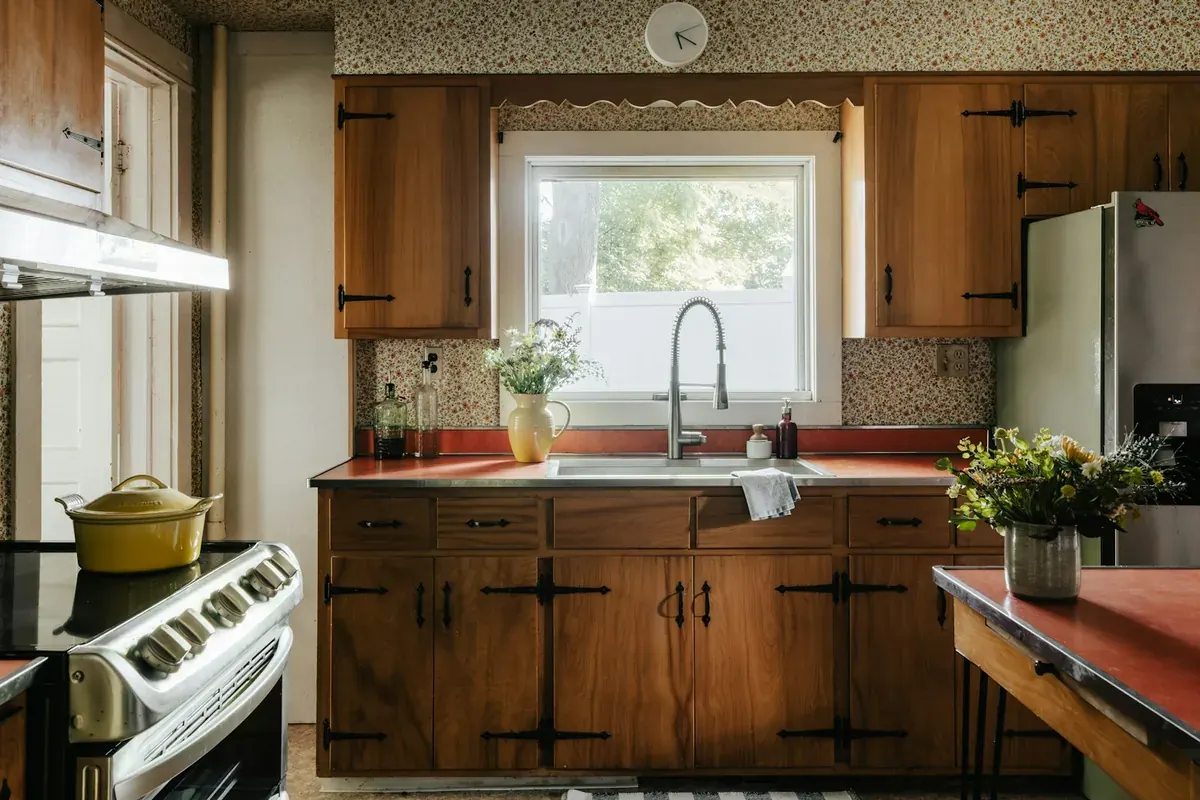
How a Custom Cabinet Project Runs in Lancaster, CA
Six stages, in this order, every time. What changes between jobs is how long each stage takes, not which stages exist. The timeline guide explains what actually drives the length of each one.
- 1Measure the room, not the plan
Somebody stands in your kitchen with a laser and a story pole and records what is actually there: wall lengths, out of square corners, floor slope, window and soffit heights, where the gas line and the drain come through, and how far the range hood duct sits off centre. Antelope Valley tract kitchens are rarely square, and a cabinet run scaled off a builder floor plan will be wrong by the width of a filler strip or worse.
- 2Design and approve on paper
You see elevations and a plan view with every cabinet numbered, sized and described before anything is cut. This is where door style, overlay, box material, interior fittings, finish and hardware get locked. Changing a drawer bank here costs a pencil line. Changing it after the boxes are built costs boxes.
- 3Put it in writing under California law
A home improvement contract over $500 has to be in writing and signed by both parties before work starts, under Business and Professions Code section 7159. The written scope should list cabinet sizes, box material, door style, finish, hardware and who does the demolition. The deposit is capped at $1,000 or 10 percent of the contract, whichever is less, by section 7159.5.
- 4Build the boxes and the doors in the shop
Sheet goods get cut and edged, carcases get assembled and squared, and doors are made as five piece frames or slabs depending on the style chosen. This is the stage where the moisture target matters: stock for cabinets and millwork is normally dried to 7 to 9 percent, and the USDA Forest Service Wood Handbook puts the dry southwestern interior target lower still, at an average of 6 percent with individual pieces between 4 and 9 percent.
- 5Finish, then let it cure
Sealer and topcoat go on in a controlled space, not in your kitchen. Antelope Valley Air Quality Management District Rule 1136 holds a commercial shop's clear sealers, clear topcoats, pigmented primers and pigmented topcoats to 275 grams of VOC per litre, so the finish schedule here is waterborne or high solids rather than an old solvent lacquer. Cured finish is also why a shop will not hand you doors the same afternoon they are sprayed.
- 6Install, scribe and adjust
Boxes get hung level off a laser line rather than off the floor, scribed to the wall where the wall is not straight, shimmed plumb, and fastened into studs. Then every door and drawer gets adjusted on its hinges and slides until the reveals are even. Installation is where a good set of cabinets is either finished properly or quietly ruined, and it is the stage most likely to be rushed.
Serving Lancaster and the Wider Antelope Valley
The service area crosses two counties and three building departments. Lancaster and Palmdale each run their own. Los Angeles County Public Works covers the unincorporated communities between and around them, from its Antelope Valley office on East Avenue K6 in Lancaster. Rosamond is over the county line and goes through Kern County. That matters the moment a cabinet job grows into a remodel that moves plumbing or electrical, and it is why each town below has its own page rather than a pin on a map.
What You Will Not Find on This Site
No customer reviews, no star ratings and no testimonials, because there are none we can honestly show you. No named author with invented credentials. No before and after photographs of somebody else's completed job presented as ours. Every photograph on the site is credited with its source, its licence and whether it was taken in the Antelope Valley, on the credits page.
Every price quoted anywhere on this site is a published Los Angeles County or national market range with the page it came from named beside it, and none of it is presented as a Lancaster specific quote, because no such published figure exists. The permit, licensing, deposit and cancellation rules are quoted from the California Residential Code, the Business and Professions Code and the City of Lancaster's own published guidance. The climate and moisture figures come from the USDA Forest Service and NOAA. If a claim on this site cannot name a source, it was removed rather than softened.
Guides for Antelope Valley Homeowners
Custom Cabinet Cost in Lancaster CA
Los Angeles County per linear foot benchmarks, what a kitchen of each size runs at those rates, installation figures by the linear foot, and the add on line items that quietly move a quote. Every number names the page it came from.
Read the guide →Cabinet Materials for Antelope Valley Homes
The high desert dries wood to a different target than the rest of the country does. What that changes about box material, door construction, finish and hardware, with the federal moisture figures and the local air district rule quoted in full.
Read the guide →Choosing a Cabinet Wood Species for the High Desert
Maple, oak, alder, cherry, walnut, hickory and paint grade poplar, compared on the axis that matters at 6.81 inches of rain a year: how much each one moves when the air changes, using the federal shrinkage figures.
Read the guide →Custom vs Semi Custom vs Stock Cabinets
Three tiers, one real question: who decides the dimensions. Installed cost per linear foot for each, where each tier stops being able to help, and a filler strip test you can run in your own kitchen this afternoon.
Read the guide →Cabinet Door Styles Explained
Slab, shaker, recessed panel, raised panel, mullion and louvre, plus the overlay question nobody explains. Which cost more, which survive a dry climate, and which you can actually clean.
Read the guide →Painted vs Stained Cabinets in a Desert Climate
Why paint costs more on the same door, what each finish hides and what it shows, how the Antelope Valley air district VOC rule shapes the schedule, and which one survives a west facing kitchen.
Read the guide →Cabinet Organization and Interior Fittings
Waste pull outs, roll out shelves, tray dividers, corner mechanisms, drawer inserts and soft close hardware. What each one costs you in cabinet volume, and which ones people actually keep using.
Read the guide →How Long a Custom Cabinet Project Takes
The five stages every cabinet job runs through, what actually sets the length of each, and the Lancaster plan review timings the City publishes. Stages and drivers only, no invented week counts.
Read the guide →Cabinet Permits and Contractor Licensing in Lancaster CA
Cabinets are exempt finish work under the state code, and moving a sink is not. Plus who may pull a Lancaster permit, how long plan review takes, the deposit cap, the cancellation window, and the three jurisdictions that split the Antelope Valley.
Read the guide →Refacing vs Replacing Cabinets in Lancaster CA
A decision guide rather than a sales pitch. The tests your existing boxes have to pass, what each path costs at Los Angeles County rates, and the situations where refacing is simply the wrong answer.
Read the guide →Custom Cabinets Lancaster CA: Frequently Asked Questions
How much do custom cabinets cost in Lancaster, CA?
Budget $500 to $1,500 per linear foot for true custom cabinets, which is the Los Angeles market range published by LA cabinet makers, against a national range of $400 to $1,200 per linear foot. Lancaster sits inside Los Angeles County, so that is the nearest published benchmark, though Antelope Valley labour generally runs below the LA basin and quotes here tend to land in the lower half of the band. Nationally, Thumbtack records a typical custom cabinet project between $1,447 to $5,294 against an average of $2,817, a band that stretches that wide because one vanity and a whole kitchen sit in the same category. The only number that means anything is the one written down after somebody measures your room.
What does a kitchen of cabinets cost at Los Angeles County rates?
At the $500 to $1,500 per linear foot LA range, a 15 foot galley runs roughly $7,500 to $22,500, a 25 foot kitchen $12,500 to $37,500, a 35 foot kitchen $17,500 to $52,500, and a 50 foot plus layout can pass $75,000. Those totals come straight from the LA cabinet maker pricing guide that publishes the per foot band. Measure the run of base cabinets along the wall, in feet, and you have your linear footage. Labour is typically 20 to 30 percent of the total, so a shop that quotes cabinets and installation separately is not hiding anything, it is just splitting the same job.
Why do cabinet doors crack and joints open up in Antelope Valley houses?
Because wood built to the wrong moisture content keeps shrinking after it is installed, and Lancaster's air is much drier than the coastal basin most cabinets are built for. Lancaster averages 6.81 inches of rain a year at 2,359 feet, with a mean daily high of 77.1F and a mean daily low of 47.1F. The USDA Forest Service Wood Handbook puts the recommended interior moisture content for woodwork and furniture at 8 percent for most of the United States, 11 percent in damp coastal areas, and 6 percent in the dry southwestern area, with individual pieces between 4 and 9 percent. A raised panel that left a humid shop at 10 percent and settles at 6 percent in a Lancaster kitchen has to lose width somewhere, and it takes that out of the glue line or the finish.
What moisture content should cabinets be built to for a Lancaster kitchen?
Ask for stock dried to the dry southwestern target, an average of 6 percent with individual pieces between 4 and 9 percent, per Table 13-2 of the USDA Forest Service Wood Handbook. The same chapter notes that lumber for furniture, cabinets and millwork is typically dried to 7 to 9 percent, which is the right band for a job that will live nearer the coast but sits high for the high desert. The Handbook states the principle plainly: no significant dimensional change will occur if wood is fabricated or installed at a moisture content matching the average atmospheric conditions it will be exposed to. Plywood and engineered panel boxes move far less than solid wood either way, which is why they are the safer carcase in this climate.
Do I need a permit to replace kitchen cabinets in Lancaster, CA?
Usually no, because the California Residential Code lists "painting, papering, tiling, carpeting, cabinets, counter tops and similar finish work" in its list of work that needs no permit, at Section R105.2. Dropping new cabinets into the same footprint is finish work. The moment the job relocates a sink, moves gas, or adds or moves circuits and outlets, you are into plumbing, mechanical and electrical work that does need a permit. Local jurisdictions can amend the exempt list, and the Antelope Valley is split across three of them, so confirm your specific job with City of Lancaster Building and Safety if you are inside the city, Los Angeles County Public Works if you are in Quartz Hill or another unincorporated area, and Kern County if you are in Rosamond.
Who is allowed to pull a building permit in the City of Lancaster?
Only a property owner who actually lives at the property, or a properly licensed contractor, or an authorised agent of either who has a Letter of Authorization on file with the City. That is the City of Lancaster's own stated rule on its permitting FAQ page. A contractor also has to have a valid City of Lancaster business licence and, where applicable, a current Workers' Compensation certificate on file before a permit can be issued to them. If a contractor asks you to pull the permit yourself as the owner, understand what you are agreeing to: the permit holder carries responsibility for the work.
Ready for a Real Number on Your Lancaster Kitchen?
Send the room and the town. You get a measured, itemised, written quote, and nothing to sign until you want to.
Get a Free Quote